The buyer’s comparison / FlowDoors + Panoramic
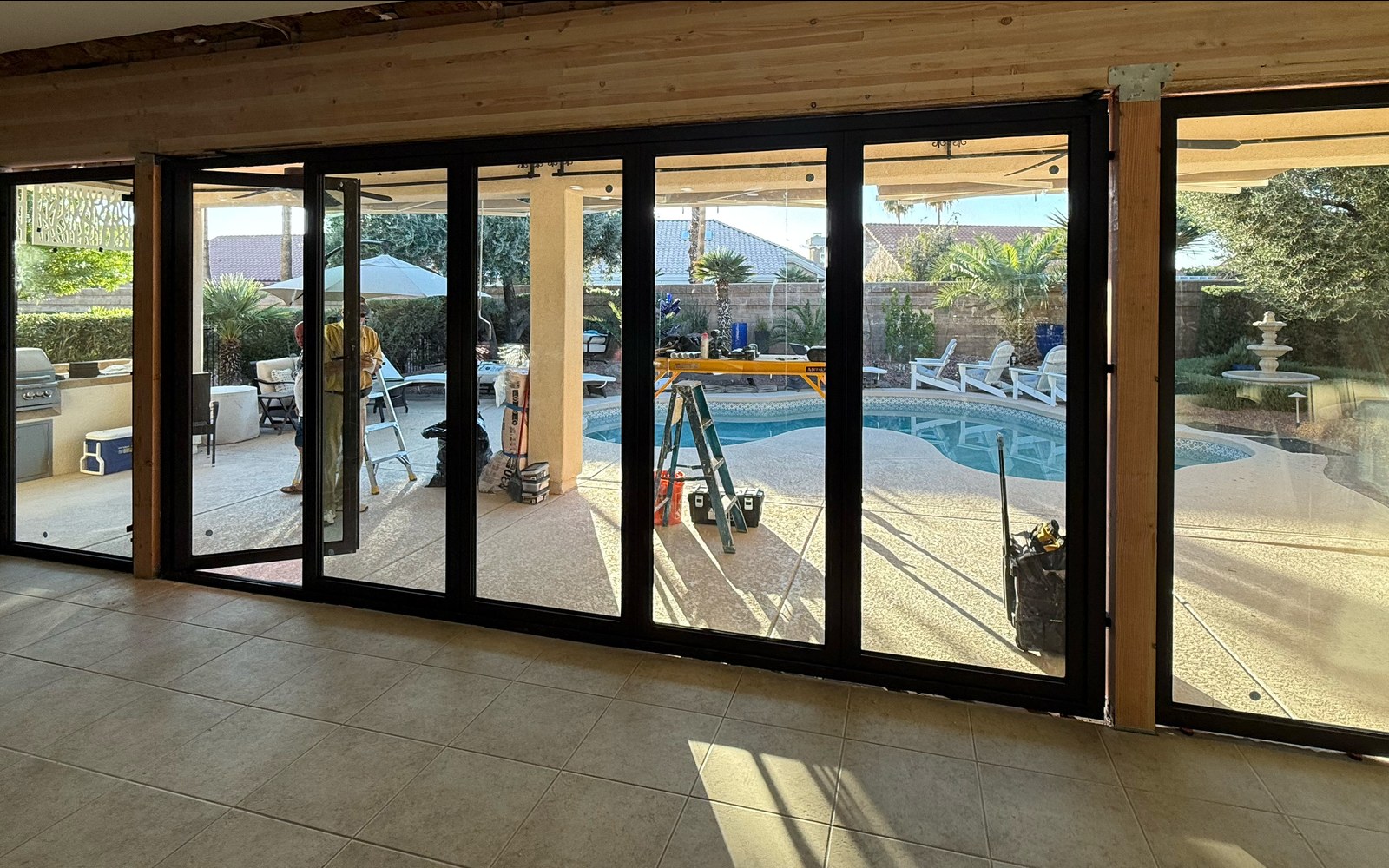
A beautiful opening.
Look closer at
what holds it together.
Considering Panoramic Doors? Compare the details behind the view: panel construction, adjustment, thermal performance and the people building your door.
FlowDoors is built in Southern California.
Start with what is shared
Both open the wall.
The details deserve a closer look.
FlowDoors and Panoramic both offer independently moving panels. You do not have to choose a connected accordion of panels to enjoy a wide opening.
The useful comparison starts inside the panel and continues through years of ownership. Our primary reference here is Panoramic Signature Aluminum. Chamberlin and Chamberlin XL are distinct options, especially when comparing thermal performance.
Panel operation
- FlowDoors
- Independent panels; everyday entry, partial opening or a wide opening. No magnetic-release step before sliding closed.
- Panoramic Signature [1]
- Independent Slide-Pivot-Stack panels.
- Panoramic Chamberlin [2]
- Independent Slide-Pivot-Stack panels.
Structural approach
- FlowDoors
- Polyurethane pultrusion core with slide-on aluminum profiles.
- Panoramic Signature [1]
- Aluminum with polyamide thermal break.
- Panoramic Chamberlin [2]
- Chamberlin adds foam insulation to the Signature frame profile.
Panel re-squaring
- FlowDoors
- Corner shimming with squaring bolts accessible from the edge of the panel. No need to remove or dismantle the panel for squaring.
- Panoramic Signature [1]
- For re-squaring that requires reglazing, the panel is removed. The glazing beads are taken off, the glazing tape is cut, and the glass is separated from the frame. The shims are removed and cleaned of silicone caulking. The panel is then reassembled, squared, and reinstalled.
- Panoramic Chamberlin [2]
- Request the model-specific service procedure.
U-factor reference
- FlowDoors
- 0.28 Dual Pane Title 24 Compliant
- Panoramic Signature [1]
- 0.34–0.39 — published by Panoramic.
- Panoramic Chamberlin [2]
- 0.29 — published by Panoramic. XL: 0.25–0.31, triple-pane.
Where it is made
- FlowDoors
- Built in Southern California.
- Panoramic Signature [1]
- Fort Worth, TX.
- Panoramic Chamberlin [2]
- Fort Worth, TX.
FlowDoors construction details are supplied by our team. The Signature re-squaring description covers a reglazing procedure; required work varies by model and adjustment. Panoramic product information draws on its published pages and product details supplied by FlowDoors. Sources & comparison notes
The engineering / 01
Sun heats the aluminum.
We give it room to move.
A door’s outside face can get hot while the inside stays cooler. That temperature difference matters: aluminum expands as it heats, and uneven movement can affect how a panel lines up.
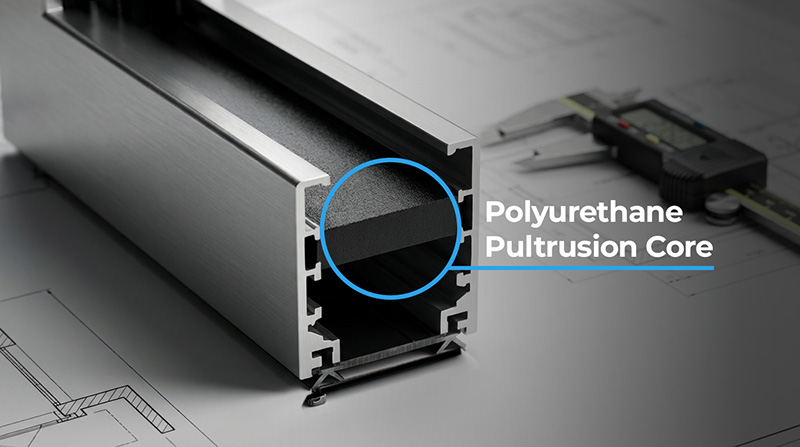
FlowDoors uses a polyurethane pultrusion core with aluminum profiles that slide onto it. The design lets the aluminum expand independently of the core, rather than asking every part of the panel to move together.
We chose this construction to help manage thermal movement. It is designed to reduce thermal bowing and its effect on alignment, so the panels can continue to meet more consistently as conditions change.
What that means for you
For a sunny opening, ask how the panel manages different temperatures on its two faces. A thermal break and a strategy for thermal movement answer related, but different, questions.
Installation, opening conditions and exposure still affect operation. This design is not a guarantee against all movement or every alignment issue.
The engineering / 02
A large panel relies
on a small connection.
Each corner helps hold the panel’s shape. Its connection is worth understanding because squareness affects the way the panel travels, meets its neighbors and closes.
FlowDoors uses machine screws through the polyurethane pultrusion into barrel bolts. The machine screw engages a threaded barrel bolt, creating a defined mechanical connection through the core.
We chose this arrangement to tie the structural members together with secure threaded connections. It is a construction choice you can ask to see, rather than a promise that a fastener will never need attention.
Ask to see the corner
What does the screw fasten into? How does the connection support the panel’s shape? Ask those same questions of each door you are considering.
Living with it / 03
If a panel needs adjustment,
there is a plan for that.
Re-squaring means bringing a panel back into its intended rectangular shape so its edges line up correctly. It is a different task from simply moving the whole door up or down.
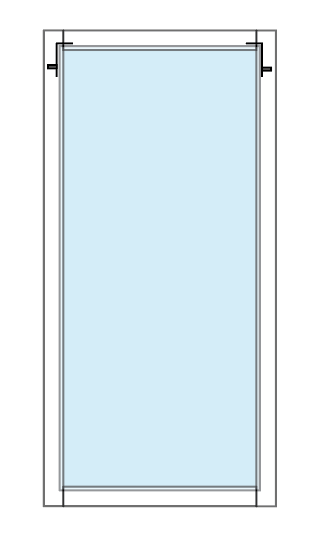
FlowDoors uses corner shimming with squaring bolts accessible from the edge of the panel to re-square a panel. There is no need to remove or dismantle the panel for squaring.
For an owner, that makes serviceability a feature to evaluate before purchase. Ask your installer to explain what can be adjusted, how access works and when a service visit is appropriate.
Panoramic Signature: re-squaring with reglazing
When re-squaring requires reglazing, the glazing tape bonding the glass to the frame needs to be released. After the panel and glazing beads are removed, the tape is cut with a razor blade to release the glass. Old tape must be scraped from both the glass and frame before fresh tape is applied. The shims are removed and cleaned of silicone, and the panel is reassembled, squared, and reinstalled.
Cutting and scraping require care to avoid damaging the frame’s painted finish.
Procedure varies by model and adjustment required; confirm the service plan for your door.
Panoramic’s currently linked Signature/Absolute installation manual describes removing glazing beads and re-packing the glazed unit when a swing panel is out of square. That is a specific procedure, not a claim about every adjustment or the Chamberlin models. Read the procedure [3]
Panel squaring / top corners
Comfort / 04
Compare the rating.
Then compare what was rated.
U-factor describes heat transfer. Lower values mean less heat passes through the rated assembly under the rating conditions.
A glass-only number is not a whole-door rating. Before choosing, match the whole-door documentation, glazing and configuration to the product on your quote.
Signature Aluminum
0.34–0.39
U-factor
Published range; confirm the configuration being quoted.
Panoramic published [1]Chamberlin XL
0.25–0.31
U-factor
Triple-pane glass. Some configurations have a lower value than 0.28.
Panoramic published [2]Reference values, not a head-to-head test. The FlowDoors number is supplied by our team and is not independently verified in this guide. These figures alone do not establish which quoted door will perform better.
Also compare solar heat gain coefficient (SHGC), orientation and shading. A U-factor difference does not translate directly into a percentage saving on your energy bill.
Made close to home / 05
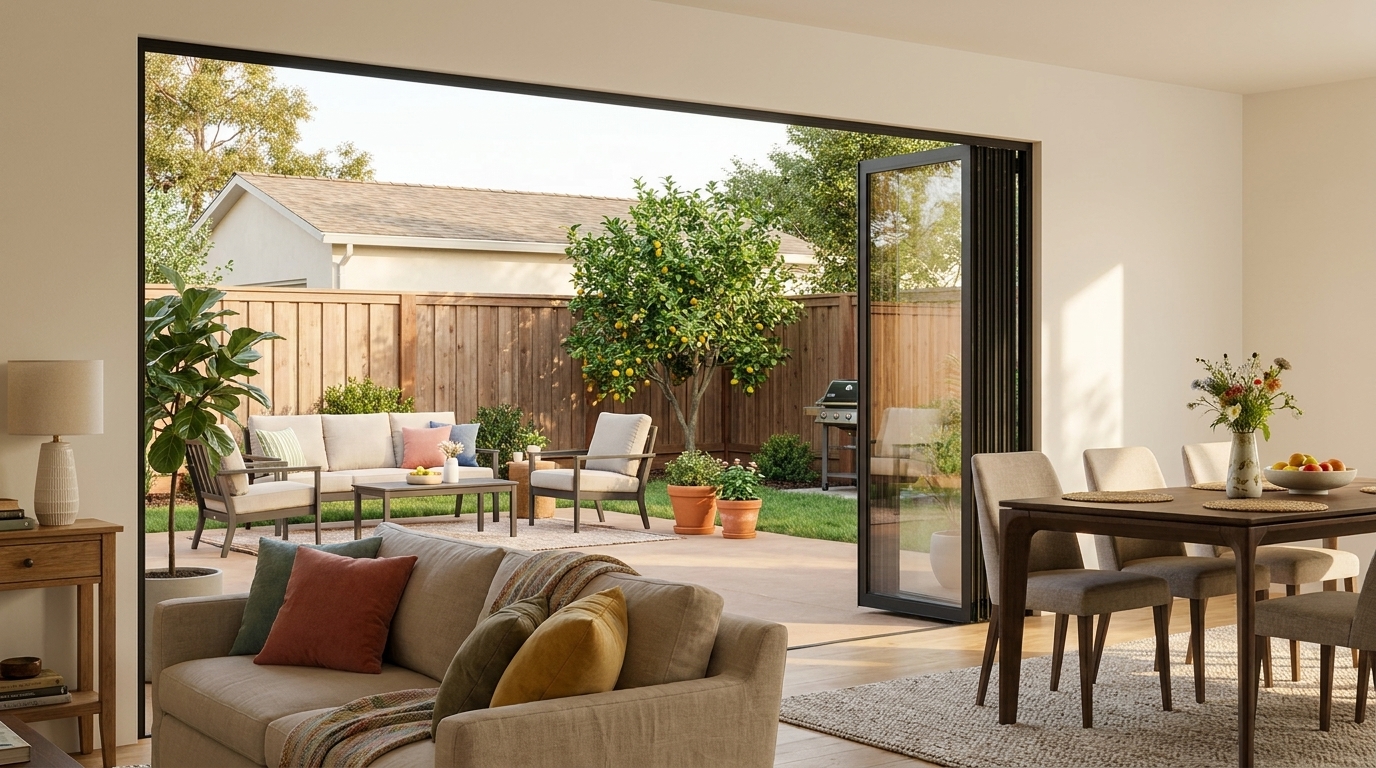
Built in Southern California.
For your particular opening.
For a Southern California homeowner, where the door is built can be part of the decision. FlowDoors is built here, and you can discuss your opening with our local team.
Bring the details that change a project: afternoon sun, a coastal location, the finished floor height, where panels should stack and how you move between the house and patio.
Use that conversation to agree on the configuration, installation responsibilities and service arrangements before you order.
Make the decision concrete
Put the same opening
on both quotes.
A useful price comparison needs more than a width and height. Take this checklist to both teams, and ask for the differences in writing.
- 01
The opening
Match width, height, panel count, entry location, swing direction and stacking space.
- 02
The specification
Match finish, glass package, whole-door ratings, threshold and screens. Identify Signature, Chamberlin or XL explicitly.
- 03
The complete cost
Separate the door, delivery, tax, installation, opening preparation and finish work.
- 04
The ownership plan
Compare written warranty terms, service responsibility, adjustment access and care requirements.
Before you choose
The questions worth asking.
Do FlowDoors and Panoramic both have independent panels?
Yes. Both offer panels that move individually rather than a connected accordion of hinged panels. Panoramic calls its operation Slide-Pivot-Stack. With FlowDoors, you can use the everyday entry panel, open selected panels for airflow, or move the panels aside for a wide opening. Try the complete opening and closing sequence on each system before deciding.
Is FlowDoors more energy efficient than Panoramic?
A brand-wide answer would be misleading. FlowDoors reports a U-factor of 0.28; the matching rating documentation and glass configuration need to be confirmed for your quote. Panoramic currently publishes 0.34–0.39 for Signature Aluminum, 0.29 for Chamberlin, and 0.25–0.31 for Chamberlin XL with triple-pane glass. Some XL configurations have a lower published value. Compare matching whole-door ratings, glass packages and configurations.
Will the structural core prevent every alignment issue?
No door design can promise that. FlowDoors allows the aluminum profiles to expand independently of its polyurethane pultrusion core, a design intended to reduce thermal bowing and its effect on alignment. Opening preparation, installation, exposure and ongoing care still matter. The two-screw adjustment system provides a way to re-square a panel without disassembling it; it does not correct every installation or structural problem.
How should I compare the prices?
Ask for the same opening size, panel layout, finish, glass, threshold and screen on both quotes. Then separate the door price from delivery, tax, installation and any work needed on the opening. Compare Signature and Chamberlin as separate Panoramic models. We do not publish a percentage price difference without comparable written quotes.
What should I ask about service and warranty?
Ask who handles the first call, who performs the work, and which parts, labor and travel costs are covered. Request the written warranty for the exact product and ask for a demonstration of panel adjustment. FlowDoors is built in Southern California; talk with our team about the service arrangements for your project location.
Is FlowDoors connected to Panoramic Doors?
No. FlowDoors is not affiliated with, endorsed by, or a dealer for Panoramic Doors, LLC. This guide names their products so you can compare specific options.
Your opening. Your comparison.
Start with a door you understand.
Then see your price.
Configure your FlowDoors online, then work through the details with our Southern California team.
Start online, on your schedule.
Sources & comparison notes
Panoramic product pages reviewed September 22, 2026:
- [1] Signature Aluminum — product details and ratings
- [2] Chamberlin and Chamberlin XL — product details and ratings
- [3] Panoramic installation manual — printed page 54, swing-panel squareness
The product pages also link to NFRC product details. Confirm the current listing and applicable configuration with each manufacturer.
FlowDoors construction descriptions and the reported 0.28 U-factor were supplied by FlowDoors. A configuration-matched rating document has not been verified for this comparison. Concept diagrams illustrate the described mechanisms only.
FlowDoors is not affiliated with, endorsed by, or a dealer for Panoramic Doors, LLC. Product names identify the options being compared. Specifications may change; your written quote and current product documentation should govern your decision.