Wide folding patio door opening to the California coast

Designed and built in California

Custom folding patio doors for California homes

FlowDoors designs and manufactures custom independent-panel folding patio doors for California homes, remodels, and indoor-outdoor living spaces.

The right system depends on more than opening size. Sun exposure, coastal conditions, airflow, existing structure, furniture, and installation details all shape the result.

Start with the room

A California patio door has to work with the house, not just the opening.

Large-opening doors are usually photographed fully open. Real homes also have direct sun, finished floors, remodel constraints, nearby furniture, and ordinary days when the homeowner wants fresh air without opening the entire wall.

FlowDoors starts with those practical conditions. A folding patio door should not only look good at its most dramatic. It should make the room easier to live in.

Questions to answer before final configuration

  • How wide and tall is the opening?
  • Is the project new construction or a remodel?
  • Does the opening face direct afternoon sun?
  • Is the property near the coast or exposed to salt air?
  • Will the door be used every day, or mainly for entertaining?
  • Do you want ventilation without fully opening the system?
  • Is there furniture, a dining table, or patio seating near the opening?
  • What threshold and drainage details are appropriate for the site?
  • What glass package makes sense for the orientation and exposure?
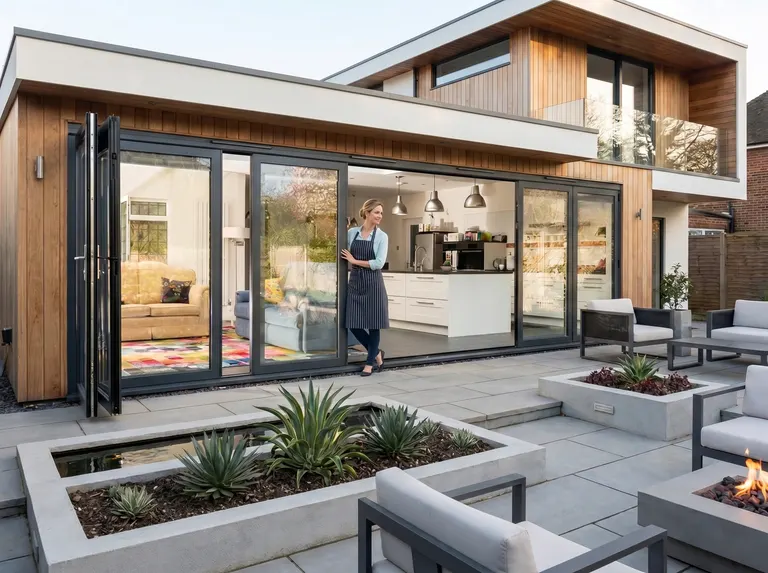
Homeowner using a wide glass patio door opening with panels collected at the side

A different movement concept

What makes FlowDoors different from traditional bifold doors?

Traditional bifold panels are connected by hinges and move as a chain. FlowDoors panels move independently along the track, while the end swing panel serves as a normal everyday entry door.

That difference creates more choices during normal life. Open one door for patio access, position selected panels for airflow, clear part of the opening for traffic, or move the full system when the room needs to connect with the outdoors.

For California homes, the patio opening may connect a kitchen, dining room, family room, backyard, pool, deck, or entertaining space. How the panels move matters every day.

Explore independent panel movement

Everyday flexibility

Independent panels create more ways to use the opening.

A wide patio opening does not live in one position. FlowDoors gives the room practical modes for ordinary access, changing weather, furniture, and larger gatherings.

Everyday entry

Use the end swing panel for normal patio access without opening the entire system. It works for quick trips to the grill, pool, garden, or backyard.

Fresh air without opening everything

Move selected panels to create ventilation where it helps most instead of treating the opening as only fully closed or fully open.

More flexibility near the opening

Plan traffic and furniture around independent panel movement rather than the swing path of a connected folding stack.

Full indoor-outdoor connection

Move the panels aside when entertaining or when the room needs to connect completely with the patio, pool, deck, or backyard.

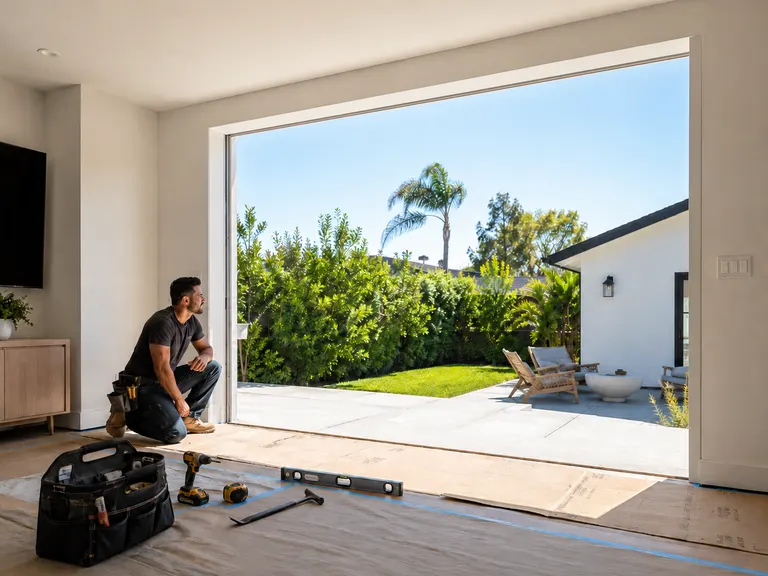
Installer checking a prepared patio door opening while preserving the existing wall and header

A cleaner retrofit path

Replace the door without rebuilding the wall.

One of the biggest concerns homeowners have when replacing a large patio door is the header.

A traditional top-hung system can place significant demand on the structure above the opening. That may lead to questions about whether the header needs to be replaced, reinforced, or redesigned before the new door can be installed.

FlowDoors is bottom-track supported, so panel weight is carried at the bottom rather than suspended from the header. If the existing patio door opening is already the size you want and the opening is in good condition, FlowDoors may be installed without replacing the header or opening the wall above the door.

Instead of rebuilding the structure, the project may be limited to removing the existing door, preparing the opening, installing the FlowDoors frame and bottom track, setting the panels, and completing the waterproofing and trim details.

This is not a shortcut. It is a smarter load path.

The opening still has to be checked. The sill and subfloor must be suitable, and the frame must be square, plumb, and level. Waterproofing still matters. But when the existing opening works, FlowDoors can help avoid unnecessary header replacement and make a California retrofit cleaner, simpler, and less invasive.

Compare movement paths

FlowDoors vs. traditional bifolds vs. multi-slide doors

Different large-opening systems solve different problems. Match the movement path to how the room will actually be used rather than choosing from a fully open photograph alone.

FeatureFlowDoors independent panelsTraditional hinged bifoldsMulti-slide doors
Panel movementPanels move independently along the trackPanels fold together in hinged groupsPanels slide behind or in front of each other
Everyday entryEnd swing panel serves as a normal entry doorUsually uses an active panel or part of the folding groupUsually one sliding panel provides access
Ventilation controlSelected panels can be positioned for airflowAirflow follows the hinged opening sequenceAirflow is generally limited to one side or overlap area
Furniture planningIndependent movement supports flexible opening arrangementsThe folding swing path can require additional clearanceFurniture must account for access and track layout
Full openingPanels move aside to clear the spacePanels fold to one or both sidesA full opening generally requires pockets or stacked tracks
Remodel planningBottom-supported design can suit many retrofit conditionsStructure and clearance depend on the selected systemPocketing may require wall depth and structural planning
Best fitFlexible daily use, airflow, and wide-opening optionsProjects where a connected folding stack suits the spaceProjects prioritizing large glass panels and sliding operation

No single system is right for every project. The useful comparison is how each one handles everyday access, airflow, clear opening, structure, furniture, and installation.

California is not one climate

Plan the door around the site.

A coastal home, a shaded inland remodel, a hillside property, and a desert-facing opening have different demands. Orientation and exposure should guide the specification.

Direct sun

Large glass openings can receive intense sun depending on orientation, overhangs, shade, and time of day. Direct sun affects comfort, glass selection, frame temperature, and thermal movement. West- and south-facing openings should be discussed early.

Coastal salt exposure

Homes near the coast need added attention to finish selection, hardware exposure, cleaning routines, and drainage. The closer the opening is to marine exposure, the more important appropriate specifications and routine care become.

Drainage and thresholds

Threshold selection affects water management, flooring transitions, exterior patio height, accessibility goals, and serviceability. A low-profile appearance should be balanced with the exposure and waterproofing needs of the site.

Glass selection

Glass should reflect opening size, orientation, privacy, comfort goals, and local conditions. A shaded opening may call for a different package than a west-facing wall exposed to strong afternoon sun.

Existing headers

A bottom-supported system carries panel weight at the sill track, but the surrounding wall still needs proper structure. Existing framing, opening width, and the loads above must be reviewed before final approval.

Finished floor conditions

Tile, hardwood, concrete, pavers, decks, and waterproof surfaces all affect threshold planning. Interior and exterior finish heights should be established before final field measurements.

Waterproofing

The door is part of the building envelope. Installation must coordinate flashing, drainage, sealants, exterior finishes, and transitions between the frame and surrounding wall.

Panel layout

Decide where everyday entry should occur, which way panels should collect, and how the opening should support airflow, traffic, furniture, and entertaining.

Certified installation

Qualified installers should understand the product, rough opening, sill support, calibration, and water-management details. Proper installation helps the system operate as designed.

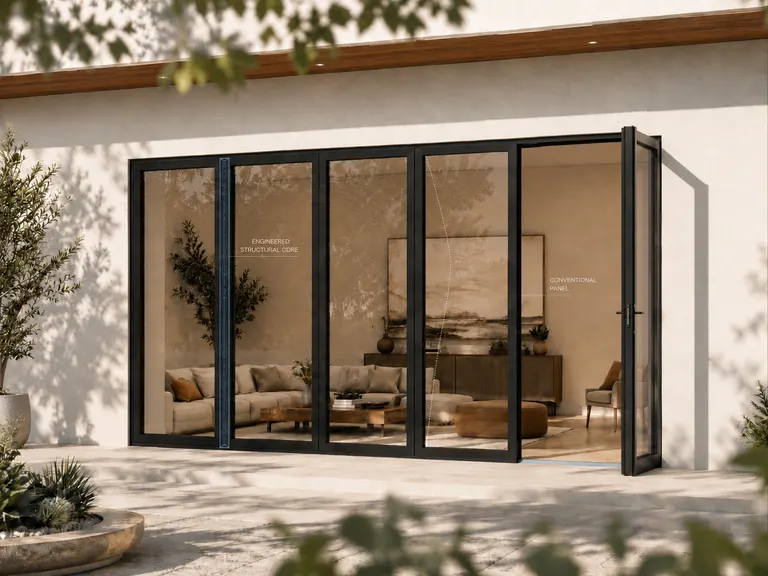
FlowDoors patio door in direct sun with the engineered pultrusion structural core highlighted
The FlowDoors panel is designed with an engineered pultrusion structural core to help manage thermal movement and support panel alignment.

Why the pultrusion structural core matters in California

Engineered to address thermal movement

California homes often put patio doors in demanding conditions. Large openings may face direct afternoon sun, dark frames can absorb heat, and long spans of material naturally expand and contract as temperatures change.

That matters even more in an independent-panel system. Each panel needs to move, align, and operate cleanly on its own. If the panel structure does not adequately account for temperature-related movement, fit and operation can become more difficult over time.

FlowDoors is designed with an engineered pultrusion structural core inside the panel. It helps the panel maintain shape and alignment more consistently as conditions change, supporting more consistent everyday operation in the system.

Why this matters

  • Large patio doors in California often experience significant sun and temperature exposure.
  • Independent panels need to stay aligned to move and operate cleanly.
  • Systems that do not adequately account for thermal movement can develop fit and operation issues.
  • The FlowDoors pultrusion structural core is designed to provide added stability within the panel.
  • That added stability helps support more consistent alignment and everyday usability.

For homeowners, the door is designed for the realities of long-term use in California conditions. For architects and contractors, thermal behavior belongs in the specification conversation, especially for large openings exposed to direct sun.

If your project faces strong sun or challenging exposure, start with your opening size and explore your options.

See your door price

Begin with the basics

Start with a preliminary door configuration.

You do not need to wait for a showroom appointment to understand the basic direction and likely price range for the opening. The configurator collects the first project decisions for review.

See your door price

Details to have ready

  • Opening width and height
  • Panel layout
  • Color direction
  • Glass preference
  • Hardware preference
  • Installation needs
  • Project location and timing

FlowDoors can then review what needs to be confirmed before final field measurement, manufacturing, delivery, and installation.

Frequently asked questions

Practical answers before you configure the opening

Are FlowDoors the same as bifold doors?+

No. Traditional bifold doors use panels connected by hinges that fold together in groups. FlowDoors uses independent panels, giving the opening more flexibility for everyday entry, ventilation, partial opening, and full opening.

Are independent-panel folding doors a good fit for California homes?+

They can suit many California projects because they support indoor-outdoor living, everyday patio access, flexible ventilation, and wide openings. The right configuration still depends on the home, exposure, structure, and installation conditions.

Can FlowDoors be used in a remodel?+

Yes. FlowDoors can be planned for remodel applications, but the existing opening must be reviewed. Header conditions, floor levels, waterproofing, drainage, and finished surfaces all influence the final project plan.

Do bottom-supported doors eliminate the need for a structural header?+

No. A bottom-supported system carries panel weight at the sill track, but the wall still needs appropriate structure for the building loads above the opening. The opening should be reviewed before final approval.

Can FlowDoors be planned for a coastal home?+

Yes, but coastal exposure requires added attention to finish selection, hardware, drainage, glass, cleaning, and routine care. A property directly exposed to salt air may require a different approach than an inland home.

Can I use one panel like a normal door?+

Yes. The end swing panel is designed for everyday entry, so the full system does not need to be opened every time someone goes outside.

Can the panels provide ventilation without opening the full wall?+

Yes. Independent panel movement allows selected panels to be positioned for airflow. This is one of the practical differences between FlowDoors and a connected hinged bifold system.

How do FlowDoors compare with multi-slide doors?+

Multi-slide panels move on parallel tracks and generally stack or pocket. FlowDoors combines an everyday swing panel with independently moving panels. The better choice depends on how much clear opening, ventilation control, wall depth, and daily access the project needs.

What should I know before requesting a price?+

Start with the approximate opening width and height, whether the project is new construction or a remodel, the preferred panel collection direction, the project location, and photos of the interior, exterior, floor, and surrounding wall.

Can architects and contractors use FlowDoors for project planning?+

Yes. Architects and contractors should review panel layout, sill conditions, structural requirements, drainage, waterproofing, and installation coordination early in design.

What is the next step?+

Start with a preliminary configuration to understand the direction and likely price for the opening. FlowDoors can then review the project details before final field measurement, manufacturing, and installation planning.
Your opening, your project

See where your California patio door project is likely to land.

Start with approximate dimensions and preferences. Final specifications follow project review and field verification.

See your door price