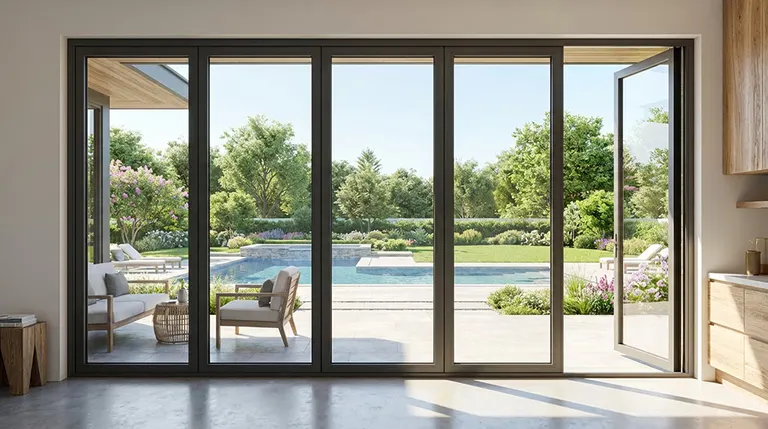
On a small window, glass selection can feel like a technical detail. On a large patio opening, it becomes part of the room. It affects heat, glare, fading, privacy, sound, and the color of the view.
That is why the right question is not simply, "Is the glass energy efficient?" The better question is, "What do I need this wall of glass to do for the way I live?"
Start With Sun Exposure
South- and west-facing openings usually need more solar control than shaded or north-facing openings. Afternoon sun can make a room uncomfortable even when the door itself is well built.
Low-E glass helps manage heat gain while preserving the open feeling that makes a large door desirable. The goal is not to darken the home. It is to keep the room comfortable enough that you still want the glass.
Think About Glare and Privacy Separately
Glare control and privacy are related, but they are not the same problem. A bright pool deck, pale paving, or ocean reflection can create glare even when privacy is not a concern.
Tint can soften brightness and add privacy, but every tint changes the view. The best choice balances comfort with the way you want the landscape, sky, and interior finishes to read through the glass.
Do Not Forget Sound
Large openings are often placed where life is loud: streets, pool equipment, neighbors, outdoor kitchens, and gathering spaces. Laminated glass can help reduce sound transmission while also adding security and UV protection.
If the opening faces a noise source, ask about acoustic performance early. It is much easier to specify the right glass before the door is ordered than to wish the room were quieter later.
A Practical Glass Checklist
- Which direction does the opening face?
- Does the room get harsh afternoon sun?
- Is glare coming from water, paving, or neighboring buildings?
- Do you need privacy during the day, at night, or both?
- Is noise reduction part of the comfort goal?
- Are floors, art, furniture, or fabrics exposed to direct sunlight?
The right glass package should feel invisible in the best way: clear when you want the view, protective when the sun is strong, and quiet enough that the room still feels like home.