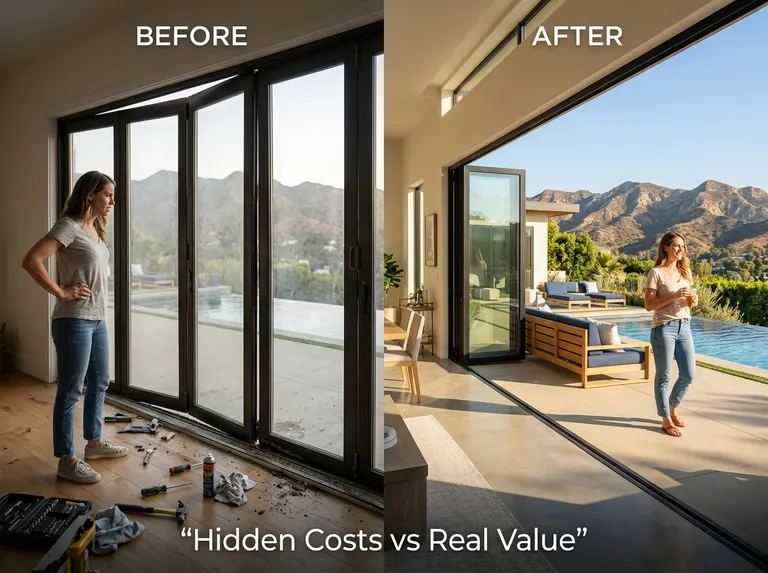
A folding patio door quote can look simple from the outside: width, height, number of panels, color, glass, price.
But the real cost of a large opening is rarely only the door. It is the whole project around the door: the structure above it, the floor below it, the glass package, the threshold, the finish, the installer, and the way the system behaves years after installation.
That is why two quotes for what appears to be the same opening can land far apart. One may include the variables that decide whether the project works cleanly. Another may leave those questions for later.
The opening size sets the starting point
Width and height are the first cost drivers because they determine how much frame, glass, hardware, track, and fabrication the system requires.
Larger openings also change the engineering conversation. Taller panels carry more glass weight. Wider openings may require more panels, stronger hardware, more careful alignment, and more installation coordination. A modest increase in size can create a meaningful increase in project complexity.
This is why a useful quote starts with the actual rough opening or planned finished opening, not only a general idea like "about twelve feet wide."
Panel count changes both price and daily use
More panels usually mean more frame material, more hardware, more seals, and more labor. But panel count is not only a cost decision. It changes how the door feels.
A configuration that looks efficient on paper may stack awkwardly, block furniture, reduce the usable opening, or make everyday entry less natural. A better configuration may cost more up front but make the opening easier to live with.
For FlowDoors, independent panel movement makes this conversation especially important because the goal is not just opening the wall once for a party. It is making the opening useful on ordinary days.
Structure can be the biggest hidden variable
Many folding door systems are top-hung, which means the panels depend heavily on the header above the opening. If the existing header is not designed for that load, the project may need structural reinforcement before the door can be installed.
That work can involve engineering, demolition, framing, drywall, finish repair, paint, and schedule delays. It may not appear in the door quote, but it still belongs in the project budget.
Bottom-supported systems change that load path by carrying the door weight through the sill and floor structure. Every opening still deserves proper review, but reducing dependency on an oversized header can simplify many retrofit conversations.
The threshold is where beauty meets water
Threshold decisions affect cost because they touch installation, finished flooring, drainage, accessibility, cleaning, and weather performance.
A flush look may be the dream, especially for indoor-outdoor living. But the right sill detail depends on exposure, patio slope, overhangs, drainage, local weather, and how the interior floor will meet the exterior surface.
The least expensive threshold is not always the lowest-cost choice if it creates water-management problems later. This is one place where planning early can prevent expensive rework.
Glass is not a single checkbox
Glass can change the quote substantially because large doors are mostly glass. The package you choose affects heat, glare, privacy, fading, sound, weight, and comfort.
A west-facing opening in Southern California has different needs than a shaded north-facing opening. Coastal exposure, direct afternoon sun, room use, and privacy all matter.
Good glass selection is not about buying the most expensive option. It is about matching the package to the way the room actually lives.
Finish and hardware affect more than appearance
Custom colors, specialty finishes, and hardware selections can add cost. They can also affect lead time and maintenance expectations.
For coastal homes, finish quality matters because salt air is harder on exterior materials. For high-use openings, hardware feel matters because people touch and operate the system constantly.
These details are easy to dismiss during budgeting, but they shape whether the door still feels premium after the novelty wears off.
Installation quality protects the investment
Large glass doors are precise systems. A good installation controls level, plumb, square, anchoring, drainage, sealant, and adjustment. Small errors can become daily frustrations.
This is why an unusually low installation allowance deserves scrutiny. It may exclude finish work, structural prep, sill coordination, waterproofing, delivery, removal of the old door, or post-install adjustment.
A clear quote should make the installation scope understandable. The goal is not the cheapest install line item. The goal is a door that feels right after the crew leaves.
Long-term ownership is part of the cost
The first price matters. So does the tenth year.
Systems that drift out of alignment, bow in direct sun, wear through rollers, stress hinges, or become difficult to lock can create service calls and daily friction. Those costs rarely appear in the first comparison spreadsheet.
This is why FlowDoors talks so much about support path, pultrusion, thermal movement, and independent panels. Engineering choices that feel technical during research become practical during ownership.
Questions that make a quote easier to trust
- What opening size and finished dimensions is this quote based on?
- Does the system require a structural header upgrade in my condition?
- What threshold is included, and how will drainage be handled?
- Which glass package is included, and why does it fit my exposure?
- What finish, hardware, delivery, removal, installation, and adjustment work is included?
- What maintenance or service should I expect over time?
The cleanest price is the one that explains itself
A good folding patio door quote should not feel mysterious. It should show how the opening, configuration, glass, structure, threshold, finish, and installation come together.
When those variables are clear, you can compare systems with more confidence. You are no longer asking only, "What does the door cost?" You are asking the better question: "What will this opening really require, and which system makes that project simpler to own?"